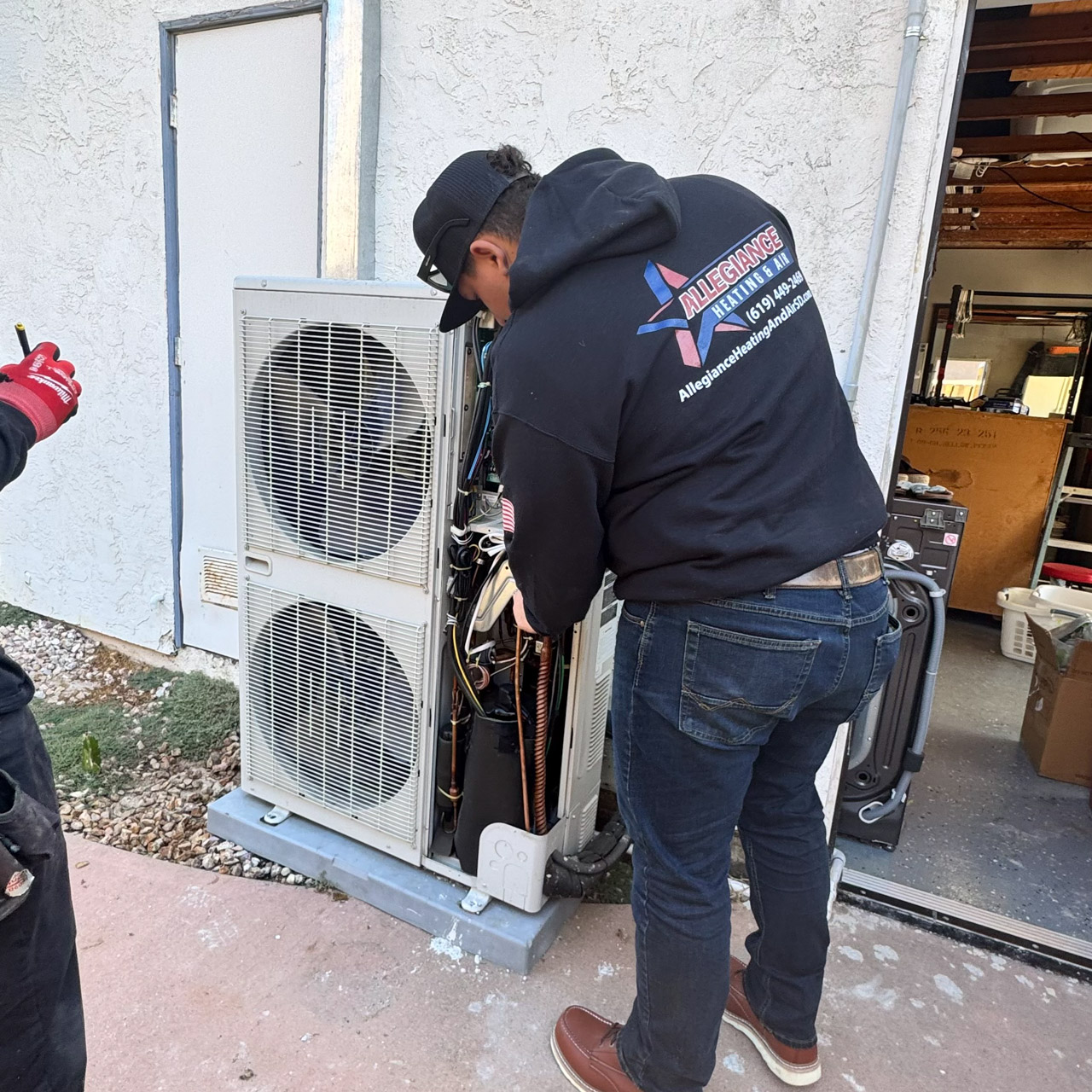
At Allegiance Heating & Air, we’ve seen what happens when good systems are left unchecked—tiny issues slowly build until they become expensive surprises. Regular maintenance keeps that story from unfolding in your home.
Intro — The Real Value of Staying Ahead
In San Diego, winter rarely feels extreme, but a few chilly nights are enough to remind homeowners how important a reliable furnace really is. Because the weather is mild most of the year, many residents assume their system doesn’t need yearly attention. Then, when the first cool front hits, furnaces that sat idle for months suddenly refuse to start—or worse, run but underperform.
We’ve serviced countless homes where a simple pre-season tune-up could have prevented a breakdown that later cost hundreds in parts and labor. Maintenance isn’t about over-servicing; it’s about protecting efficiency, safety, and peace of mind.
A well-maintained furnace:
-
Heats evenly and quietly.
-
Uses less energy to reach the same temperature.
-
Lasts years longer than neglected units.
In this article, we’ll explain what happens during a professional tune-up, why small problems escalate when ignored, and how routine visits save San Diego homeowners money and stress every winter.
1. What a Professional Furnace Tune-Up Includes
A tune-up isn’t a quick dust-off; it’s a detailed inspection and optimization designed to restore your system to peak condition. When an Allegiance technician arrives for maintenance, the visit follows a structured checklist developed from years of field experience.
The process generally includes:
-
Safety Inspection – We examine the heat exchanger for cracks, verify carbon-monoxide levels, and ensure venting is clear.
-
Electrical Testing – All wiring, relays, and voltage readings are checked for stability and wear.
-
Ignition and Burner Cleaning – We remove dust, debris, and oxidation that cause ignition delays or incomplete combustion.
-
Blower and Motor Service – Motors are lubricated, belts adjusted, and bearings tested to prevent noise or failure.
-
Filter and Airflow Check – We replace or clean filters and measure airflow pressure through ducts.
-
Thermostat Calibration – Settings are verified so temperature readings match actual comfort levels.
-
System Performance Test – We confirm temperature rise, cycle timing, and overall efficiency before wrapping up.
Each appointment is documented in a digital report that includes readings and photos. That record helps homeowners see what’s been done and creates a baseline for future visits.
FAQ #1 — How long does a furnace tune-up take?
A standard tune-up typically lasts between 60 and 90 minutes. More complex systems or homes with multiple units may take longer. The time investment is small compared to the cost of an emergency repair on a cold evening.
Regular furnace tune-ups also meet manufacturer requirements for warranty coverage. Many homeowners don’t realize warranties can be voided if routine maintenance isn’t documented. Having a professional service record protects you from those costly surprises later.
2. How Small Issues Grow into Costly Repairs
Every furnace failure we fix started as something minor—dust on a sensor, a clogged filter, or a weak capacitor. Left unaddressed, those minor issues stress the system until parts overheat, motors fail, or safety switches trip repeatedly.
Here’s what we commonly see across San Diego homes:
-
Dirty Filters → Overheating: Restricted airflow causes internal temperatures to rise. High-limit switches shut the furnace off repeatedly, eventually burning out the switch or blower motor.
-
Corroded Sensors → Ignition Failure: Salt-laden coastal air corrodes flame sensors. The furnace can’t confirm ignition, so it shuts down. Cleaning the sensor during maintenance avoids a mid-winter service call.
-
Loose Electrical Connections → Intermittent Operation: Vibration loosens wiring over time. A tightening fix now prevents a $300 control-board replacement later.
-
Lack of Lubrication → Motor Burnout: Friction increases energy use and heat generation, shortening motor life dramatically.
When our technicians perform seasonal inspections, they’re not just tightening screws—they’re preventing a chain reaction of wear and failure.
FAQ #2 — How often should I schedule furnace maintenance in San Diego?
Once a year is ideal—preferably in the fall, before consistent heating begins. Even if your furnace seems to run fine, annual checks keep parts clean and calibrated so they stay that way.
Maintenance isn’t a luxury service; it’s insurance against inconvenience. A $199 tune-up can prevent a $1,000 repair. And perhaps the greatest benefit is avoiding those cold nights when every HVAC company in town is booked solid.
3. Efficiency, Energy Costs, and Performance Over Time
Think of your furnace like a car. It runs best when tuned regularly and begins losing efficiency the moment maintenance lapses. Dust on burners, worn belts, and weak capacitors each add small inefficiencies that slowly drive up utility bills.
An efficient furnace burns fuel cleanly, transfers more heat into your home, and cycles on and off less often. When neglected, combustion becomes uneven, forcing the system to work harder to maintain the same comfort level. Over time, that extra strain compounds wear on motors, igniters, and safety sensors.
A typical gas furnace loses about five percent of its efficiency each year without maintenance. That might sound minor, but across a decade, you could be paying 30–40 percent more for the same heat. For San Diego homeowners with moderate heating use, that often equals hundreds of dollars in wasted energy annually.
FAQ #3 — Does a furnace tune-up really save money on utilities?
Yes. Clean components and proper calibration reduce run time and fuel consumption. Most homeowners notice smaller bills immediately after a tune-up—especially when filters and burners are freshly serviced. The savings accumulate throughout the season, often offsetting the entire cost of maintenance.
In a region where winters are mild, maximizing efficiency matters even more. Since furnaces run intermittently, they need to reach full efficiency quickly. That’s only possible when the system is clean, well-lubricated, and properly balanced.
4. San Diego’s Unique Climate Challenges
San Diego’s weather is famously comfortable, but its environment is tougher on HVAC systems than most people realize. Coastal neighborhoods battle corrosion, while inland areas face dust buildup and low humidity that dries out seals and bearings.
-
Coastal Homes: Salt in the air accelerates rust on burners, coils, and heat exchangers. Preventive cleaning and protective coatings are essential near the beach.
-
Inland Homes: Dry air means more dust. Filters clog faster, and motors work harder to move air through dirty ducts.
-
Marine Layer Moisture: Morning fog adds moisture that can settle inside metal housings, leading to early corrosion if not checked.
Because of these microclimates, San Diego homeowners benefit from local expertise. Allegiance technicians tailor maintenance steps based on neighborhood conditions. A tune-up in La Jolla isn’t identical to one in Poway—the environment dictates how we clean, test, and protect your equipment.
FAQ #4 — Do I need furnace maintenance if I live near the coast?
Absolutely. In fact, you may need it more frequently. Salt corrosion can shorten a furnace’s lifespan if it’s not inspected and cleaned yearly. Regular maintenance removes buildup and protects sensitive parts from deterioration.
San Diego’s mild winters can lull homeowners into postponing service, but the very climate that feels forgiving is what wears systems down silently over time.
5. Extending Lifespan and Reducing Future Repairs
A furnace’s average lifespan ranges from 15 to 20 years—but only when properly maintained. Skipping yearly inspections typically shortens that by five years or more. The difference comes down to how stress accumulates inside the system.
During maintenance, our technicians monitor wear patterns, replace inexpensive parts before they fail, and keep airflow balanced. This proactive approach prevents breakdowns that often happen during peak cold snaps when systems are under the most demand.
Replacing a furnace early costs thousands; maintaining one costs a fraction. More importantly, the comfort consistency of a well-kept unit improves daily life—no uneven rooms, no sudden temperature drops, no middle-of-the-night shutdowns.
FAQ #5 — How can I make my furnace last longer?
Schedule professional tune-ups annually, change filters every 1–2 months during heavy use, and keep vents unobstructed. If your system is older, consider upgrading the thermostat to a programmable model—it reduces cycling stress and saves energy.
At Allegiance Heating & Air, every maintenance visit includes a detailed report showing your furnace’s condition year after year. Those records help you plan proactively—whether that means another year of reliable performance or preparing for an eventual upgrade.
6. The Long-Term Benefits of Routine Care
Preventive maintenance protects more than your wallet; it protects comfort, safety, and reliability. Carbon monoxide leaks, electrical shorts, and worn ignition components all start small. Routine inspections ensure they’re corrected before they pose risks.
Homeowners enrolled in Allegiance’s maintenance program enjoy:
-
Priority scheduling during peak seasons.
-
Discounts on diagnostic and repair services.
-
Extended system lifespan and better indoor air quality.
-
Peace of mind knowing their system is inspected by the same trusted team each year.
Regular maintenance is one of the simplest, smartest investments you can make in your home. It keeps heating costs predictable, prevents mid-season emergencies, and preserves manufacturer warranties.
When your furnace runs efficiently, your home stays comfortable without effort—and that’s the ultimate goal.
Comfort That Lasts Year After Year
Preventive care may not feel urgent, but it’s the reason some homeowners never face costly winter breakdowns. A single visit each year can save hundreds in repairs, extend your system’s life, and keep energy bills manageable.
At Allegiance Heating & Air, we’ve built our maintenance program around reliability. We schedule tune-ups at convenient times, explain what we’re doing, and document every step for your peace of mind.
If your furnace hasn’t been serviced in the last year, now’s the perfect time to act. You can book online in minutes or request an estimate to learn how annual maintenance protects your comfort next winter—and every winter after that.


8733 N Magnolia Ave #204
Santee, CA 92071
619-449-2469
marketing@allegiancehvacsd.com
Monday – Friday: 8:00 AM – 5:00 PM