
It’s easy to ignore the little things—until they turn into big problems. If you’ve ever walked into a warm house on a hot San Diego day and thought, "Something feels off," this article is for you. From strange sounds and odd smells to rising energy bills and weak airflow, your AC often warns you before it gives out completely. The key is knowing what to look for—and acting before it costs you a fortune.
Let’s walk through the most common early signs of AC trouble, what they might mean, and when it’s time to call in a professional. And if you're wondering where to start, just click any of the questions below to jump to the answer you're most curious about.
What are the first warning signs my AC system is failing?
Most homeowners know what their AC usually sounds and feels like. So when things start to change—like it runs longer, cools unevenly, or sounds different—that’s your first clue something’s not right.
-
Slower cooling: If it takes your system longer to reach your desired temperature, it could be a refrigerant leak, restricted airflow, or failing components.
-
Moisture or puddles: Any unexplained water near your unit likely means a clogged drain line or frozen coil that’s thawed. San Diego’s drier climate means this isn’t normal—get it checked.
-
Ice buildup: Ice on the coils or refrigerant lines is a red flag. This often means airflow is restricted or your refrigerant levels are off.
-
Inconsistent room temperatures: If some rooms are warmer than others, your ductwork might be leaking or your system could be losing efficiency.
-
Spike in your energy bill: Your usage hasn’t changed—but your bill did. That’s often the system working harder to do the same job.
Paying attention early could mean a quick fix instead of an expensive overhaul. When in doubt, search “hvac diagnostic near me” and get a professional opinion.
Why isn't my air conditioner cooling my home effectively?
Let’s be honest—it’s frustrating when the AC is running but your house still feels warm. But before assuming the worst, let’s break down what might be going on:
-
Low refrigerant levels: Refrigerant doesn’t just disappear—it leaks. And when it does, your system can’t cool like it should.
-
Dirty filters or coils: These slow down airflow and keep your system from pulling heat from the air. That means longer run times and less comfort.
-
Thermostat trouble: If your thermostat is reading temps wrong or placed poorly (like in direct sun), it’ll confuse your system.
-
Leaky ducts: Cool air could be escaping before it ever gets to your vents. Older San Diego homes are especially prone to this.
-
Outdoor unit problems: If your condenser is blocked by plants, dirt, or debris, it can’t release heat properly—resulting in warmer air inside.
If these symptoms sound familiar, try a quick search like “hvac fix near me” or “air conditioner repair in San Diego” and get a second set of eyes on it.
What do strange noises from my AC unit mean?
You shouldn’t need to turn up the TV to drown out your AC. If your system starts making new or louder noises, here’s what they could mean:
-
Grinding or clanking: Internal parts may have come loose or worn down. If ignored, they can cause major internal damage.
-
Squealing or screeching: Usually a worn-out belt or motor issue. Common in older units that still use belts.
-
Clicking sounds: Could be a faulty relay or thermostat—especially if it clicks but won’t turn on.
-
Buzzing: This often points to electrical issues or debris near your outdoor unit.
-
Bubbling or hissing: These are warning signs of a refrigerant leak. That’s not a DIY fix—you’ll need an expert.
Search “hvac repairs near me” if your system suddenly sounds like a haunted house. Strange sounds rarely fix themselves.
Should I be concerned about bad smells from my air conditioning?
Absolutely. Odors from your vents aren’t just unpleasant—they’re often a sign of something going wrong.
-
Musty smell: Mold or mildew could be growing in the drain pan or on coils. That’s a common issue in humid corners of your home.
-
Burning smell: This might be from overheating wires or motors. Shut it off and call a pro immediately.
-
Sweet chemical odor: Often means refrigerant is leaking. Don’t wait—this affects performance and your air quality.
-
Dirty sock smell: Bacteria or mildew buildup on your evaporator coil. It’s gross—but fixable with a professional cleaning.
AC systems aren’t supposed to have a smell. If you’re noticing one, search “hvac repairman near me” and let someone take a look.
Is frequent cycling normal for my AC system?
Short bursts of AC activity—also called short cycling—are a sign that your system’s struggling.
-
Oversized system: A too-powerful unit cools your space fast, but doesn’t run long enough to manage humidity.
-
Low refrigerant: Without enough refrigerant, your system works harder, then shuts off before cooling properly.
-
Blocked airflow: Dirty filters or obstructed return vents make your system overheat and shut down.
-
Electrical or thermostat issues: If your thermostat is malfunctioning, it may cause your system to start and stop erratically.
The more often your system starts and stops, the faster it wears down. You’ll also notice rising bills. Not normal—and definitely worth a look.
Why are my energy bills suddenly higher?
Unless San Diego Gas & Electric raised rates again, a sudden jump in your energy bill probably points to your AC.
-
Dirty filters and coils: These reduce airflow and force your system to work harder.
-
Refrigerant leaks: With less refrigerant, your AC runs longer to reach your set temp.
-
Leaky ducts: Up to 30% of cooled air can escape through holes or poor insulation.
-
Old equipment: Older systems lose efficiency over time. If yours is 15+ years old, it could be time to talk upgrades.
A quick way to check: Compare this year’s summer bill to last year’s for the same month. If your usage is similar but your bill is higher, your AC could be the reason.
How urgent are AC repairs in San Diego?
Here’s the thing—San Diego may not get as hot as Palm Springs, but when it’s 88 and your AC dies, it feels just as bad.
-
Small problems become big ones: What starts as a clogged drain can turn into a fried compressor if ignored.
-
Summer backups: HVAC companies book up fast when the first heat wave hits. You don’t want to wait days without cool air.
-
Health risks: High indoor temps can be dangerous for kids, seniors, and anyone with respiratory issues.
If your system is acting up—even if it’s still technically working—book the repair now. Emergency ac repair is always more stressful and expensive.
How do I choose the right HVAC repair company?
We get it—typing “hvac repair company near me” into Google gives you a lot of choices. But here’s how to find someone you can actually trust:
-
Check licensing: In California, HVAC contractors must be licensed. It’s your protection.
-
Look at reviews: See what San Diego homeowners are saying on Google or Yelp.
-
Ask about warranties: Reputable companies back their work.
-
Don’t fall for scare tactics: Honest companies explain what’s wrong without trying to upsell you.
-
Experience matters: Choose someone who knows your type of system—and your neighborhood.
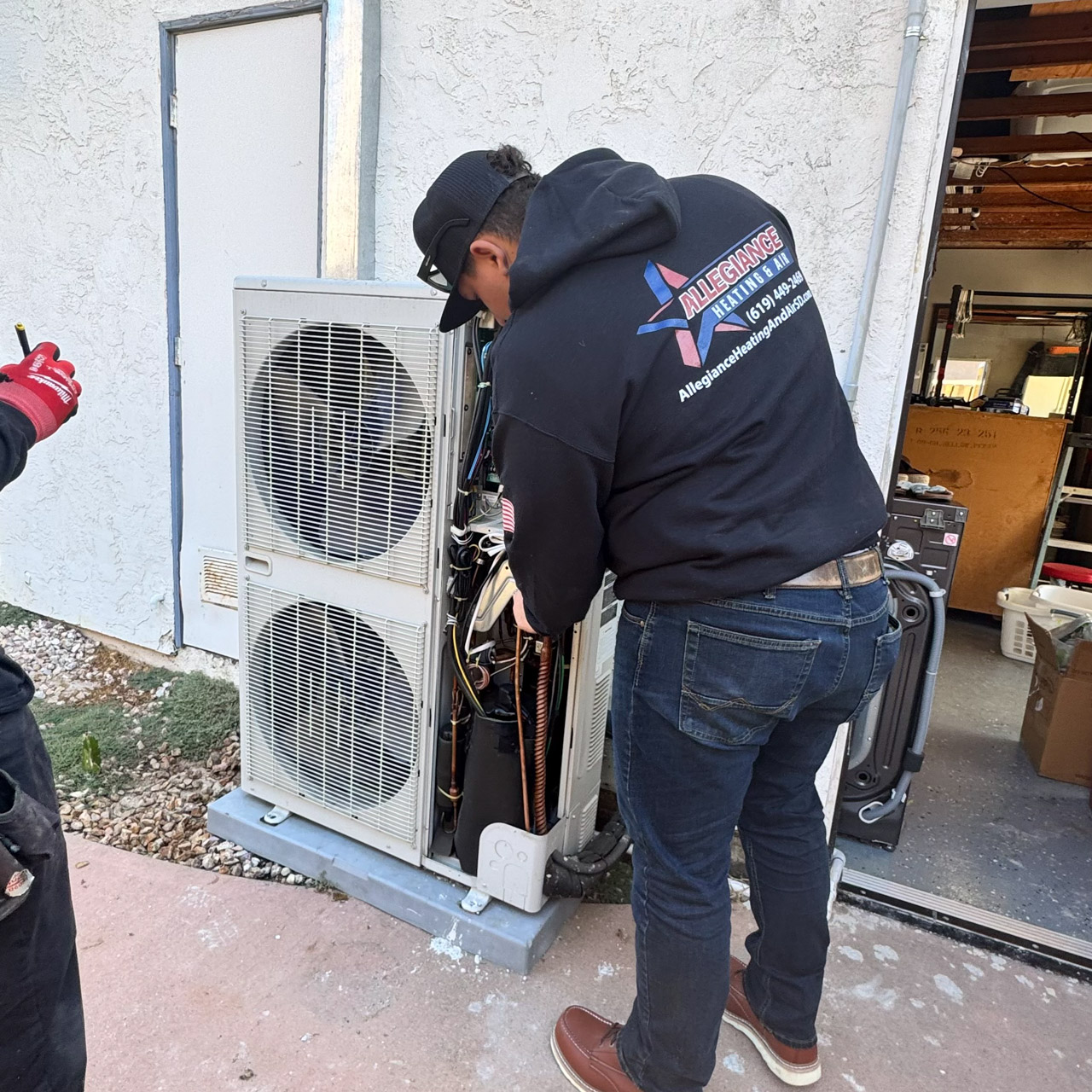
At Allegiance Heating & Air, we’ve been helping San Diego homeowners for nearly 40 years. We’re honest, thorough, and treat your home like it’s our own.
Need Help with HVAC Repairs Near You?
Whether your system’s squealing, dripping, or simply not cooling like it used to, we’re here to help. Early intervention saves money, reduces wear, and keeps your family comfortable through the next heatwave.
Schedule your repair with Allegiance Heating & Air today—and let’s fix it before it becomes a bigger problem.


8733 N Magnolia Ave #204
Santee, CA 92071
619-449-2469
marketing@allegiancehvacsd.com
Monday – Friday: 8:00 AM – 5:00 PM